Showing posts with label lone bush. Show all posts

Saturday, 13 August 2016

The Burren: Land of the Fertile Rock.


Slieve Elva from slieveelva.com

I have visited the Burren countless times over the years, each time I’m awestruck by the landscape which leads me astray amongst the grey purple rock and twisting roads.


Although the Burren appears barren, it has been inhabited and farmed for almost six millennia and 
is full of unexpected treasures awaiting discovery.


‘The Lowering Sky’

The iconic Poulnabrone dolmen, Poll na mBrón, "hole of sorrows”, above, is thought to have been built here because of a natural spring which rises close by. 
The spring has flowed for thousands of years as it does to this day. 


The ice carved rock and water scarred limestone holds the resting places of many ancestors.


Páirc na Binne wedge tomb is one of 80 such monuments on the Burren.


The Glenisheen collar, perhaps an offering to the gods, 
was found by a local man near Ballyvaughan in 1934.


Here Pagan practices sit side by side with Christian devotions.


Abbey at Kilmacduagh with hill top mound on the horizon.


A luxuriant hidden valley hides a clear spring well.


Spring flowers emerge in unlikely places.


There is a goddess above a doorway,


near a stone to cure the backache.


Twisted whitethorn turns against the Atlantic wind


and sudden lowering cloud descends down to the Flaggy Shore.


The wild Burren holds many surprises.


In recent years, Jeff O’Connell wrote about the late Patrick Sheehan, professor of Modern Irish Literature. He recalled a visit they made to the Burren at 2am to discover whether places, once inhabited, still held the spiritual traces of the people.

“ … if anyone had seen us they would have truly thought we were, truly, away with the fairies … 
Suddenly we began to see tiny points of light all over the place for maybe 15 or 20 minutes.
We were stunned and found we’d had the same kind of experience.
We headed home and hardly ever talked of it again.”

Years later O’Connell discovered that the spot they had visited was the site of a long deserted village.


Although I love this grey green landscape, I have come to realise that I'm not wholly at ease here.
In the silence broken only by birdcall and wind, I have often felt myself observed and am certain that for a few moments I am not alone.
The land of the fertile rock holds memories of the past and old ones still haunt the land.


For a taste of the Burren in spring:


My understanding of the Burren has been greatly increased by reading “The Book of The Burren’ which includes chapters on its’ geology, flora, wildlife, pre-history, sacred wells and much more. 


You can order the book HERE

For a glimpse into how life may have been lived in the 16th century, the Burren mystery novels by
local author Cora Harrison, featuring her Brehon detective, Mara, are worth reading.


Her books are HERE

But nothing compares to visiting the place itself. 
If you intend to visit the Burren this is the map you need. 
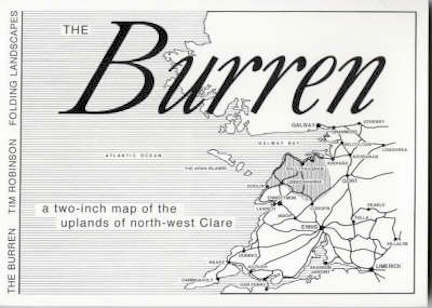

The Burren by Tim Robinson is detailed enough to show wells, sacred sites and places of folklore,
but beware - it will not stop you from being led astray. 

Available from: Tim and Máiréad Robinson. Folding Landscapes. 
Roundstone, Co. Galway.  Email: info@foldinglandscapes.com 


Sunday, 3 July 2016

“In silent need they searched for Hallowed ground” The Pagan burials of rural Ireland.


Rath Coffey, also known as Raheen or the Fairy Hill.

I visited Rath Coffey before Bealtaine, when the leaves were just a haze on the branches and the Aos Sídhe had not yet emerged to travel the land.


A boreen skirts the river and leads to a tangled ditch filled with brambles but once clambered over, the mound is just a short walk away.
Although close to the road, it remains somehow remote and isolated.
The ráth is home to the Good People and there are many stories which relate the consequences of interfering with the trees and land about it. 


Human activity near the Otherworld mound is unwelcome, 
today Raheen Field is used to graze cattle.

It was understood that entering the mound led to underground passages which radiated outwards, enabling the Good People to travel beneath the land to various locations in the neighbourhood.


One such passage led to another local Fairy Fort near to the home of a family, the Bells, who were tormented by invisible hands. 
Why they attracted this attention isn’t recorded, though it was known that the unseen activity led the householders to block up a window.

The strong belief in the Good People meant that the Fairy Hill was respected but avoided and it’s position, close to the river Barrow, added to the perception that it was a liminal place, between this world and the Otherworld. 


Known as ‘the graveyard of Pagans’ the rath invokes an air of sadness even 
on a clear spring morning.

Rath Coffey once held an important role in the community but today few remember its’ secret: the mound was a cillín, an unofficial burial ground, where grieving families came to bury their unbaptised babies. 


Stones were placed to mark small graves on Rath Coffey.

The Church held that stillborn or unbaptised babies who died soon after birth, could not be regarded as members of the Church.
As they were considered to inhabit the Limbo of Children, a place between Heaven and Hell, these infants were denied internment in the consecrated grounds of Catholic cemeteries.


In the face of this decree some parents, if they had land, buried their infant in the corner of a field or garden, others had no choice but to lay their babies to rest in a once sacred place, away from prying eyes.


This ruling also applied to people who had died by suicide, mothers who died 
in childbirth but hadn’t been churched and strangers whose religion was unknown.
But the greatest number of those buried in pagan graves were unbaptised babies.

Throughout rural Ireland cillíní were in special locations, at the in-between places; 
by Megalithic tombs and ring forts, on beaches and islands, near sacred wells and old churches 
or beneath lone whitethorn trees.


Lone thorn and stone on Rath Coffey.

Perhaps some families believed that their infants would be cared for by their Ancestors or by the Good People when there was no place in heaven for them.


Research in 2013 recorded 1,394 children’s burial grounds within the Republic.

It was customary in rural areas to perform burials between dusk on the day the infant died 
and sunrise the following day. Often the father would be alone when he dug the grave and marked 
the site with stones.  
In one community, where 21 babies had been buried, WHITE QUARTZ  had been used to outline each resting place.


Raithin Well, Co. Clare which is surrounded by an air of melancholy. 
Research after my visit showed the presence of a cillín behind the well, 
close by the lakeshore.

Visiting the cillíní was a very moving experience for me, remembering the lost infants and the countless bereaved women brought me to tears and it is unsurprising that many of these places are still shrouded in aura of sorrow.

However these lonely burial places are now being remembered and brought back into the community. 


This is a reclaimed ring fort in the Midlands, used by generations as an unofficial burial
ground for their unbaptised babies until recent times.


The site was cleared of brambles and undergrowth, the stones placed upright where they had fallen and new trees planted to create a place of remembrance and play.


On some days the space is filled with the laughter and shouts of local children


and offerings are left.


As time passes the fort will hold happier memories but the lost children will always be recalled by local people. 
And the land still remembers.

Please take 30 minutes to watch Oileán na Marbh, Island of the Dead, a programme first shown on TG4, broadcast in Irish with English sub-titles.


Sunday, 17 April 2016

Blackthorn, dark sister of the May.


Blackthorn, Draighean, a prelude to the May, 
has recently started to blaze a trail, like pale spirits across the land.


Unlike the whitethorn, blackthorn blossom appears before the leaves unfurl, giving a contrast of white flowers against dark, thorny branches and although both trees in folklore are associated with fairy belief, tales told of the blackthorn are darker.


White blossoms are appearing to signal the ebbing of the winter weather.


Blackthorn is understood to be protected by the Good People and only the fool hardy would consider cutting or burning these thorns. 


In other places, whether a lone bush or a stand of trees, the thorn should not be cut on May 11th, 
the old date for Bealtaine, or on November 11th, the original Samhain. 
Those who ignore this advice do so at their peril as it is known They have their own ways of exacting the price to be paid.


Lone blackthorn.


Where blackthorn grows near whitethorn, the site is considered especially magical. 
This is Dempsey’s Ring. Co. Offaly, photo taken in summer 
showing some remaining whitethorn blossom.
Here both blackthorn & whitethorn trees protect the remains of a fairy fort.


Just as the devil is said to spit on blackberries at the start of winter, so the Good People blight the sloes of the blackthorn at Samhain.
In Galway it was customary to drink sloe wine on Hallow’een, whilst in Co. Roscommon the last sloe was baked into the Barn brac, the Hallow’een cake, and whoever received the fruit in their slice was the person who would live the longest.


Sloes, the fruit of the blackthorn, are still used to make sloe gin.


The tree itself is said to be protected by the ferocious Lunantishee, beings believed to live within 
the bush itself.
Some associate the blackthorn with the Leannán Sidhe, the Fairy Lover, who seeks the love of a mortal but whose love is both beautiful and terrible. 
Once captivated the human is blessed with poetic inspiration but will finally waste away of longing for her.


‘The Spirit of Blackthorn’ painted after many visits to a wild place where
 thorn trees grew unmolested.


The fierce nature of the thorn is also reflected in Irish mythology when it was used by warriors who fought with clubs of spiked blackthorn ringed with iron. 
The shillelagh or Irish fighting stick was also made from blackthorn because of its’ hardness and the wood was cured to further strengthen it by burying it in a dung heap or smearing it with butter then placing it up the chimney.


Antique shillelagh.
It is said that the first blackthorn fighting stick was made in the village of Shillelagh, Co. Wicklow and they were developed by the Siol Ealaigh people of the area over 1,200 years ago.


In many areas a thorn walking stick was understood to be a charm against danger and evil spirits 
and when carried at night, it protected against ill-wishers and the attentions of the Good People.


Image from pinterest.com
'Paddy the sticks', who made and sold blackthorn walking sticks 
was once a well known figure in Killarney.
.
The abiding belief in the Good People here has meant that in many places fear of retribution has guarded the blackthorn and hidden many sacred sites from destruction.


In untamed places, where the blossom grows thickest, 
beware the paths which wind through her spiny tunnels, for eventually
they will lead you to the waiting Lunantishee and on into the Otherworld.

Saturday, 17 October 2015

Otherworld shenanigans: The Fairy Wife.

It was around this time of year when Jim and I were chatting that I asked if he'd ever seen the
Good People himself.
" No, but my mother told me about the Fairy Wife " he replied.

Back then in the summer months many families spent their days outdoors on the land, taking their
meals in the open air and only going inside to sleep.


Jim's mother would have a fire in the yard where she cooked and when she was alone there one evening she heard a commotion.

Harvesting by hand.

Looking across into the field, she saw the neighbours had stopped working and were shouting.
A women, her hair loose, was running across the field making for Lough Duff below.

The lough was still there in those days, deep and dark, with the island in the centre.

The 1829 Ordanance Survey Map of the area showing Lough Dubh, the island and the fairy thorn.

"Everyone knew the fairies lived there and no one would set foot on it." Jim explained.

Jim's mother hurried over and recognised the woman as the wife of a local man.
It was clear that she was going to throw herself into the lake so the men left their work and went
to save her.

Lough Doire Bhile, Glengoole. The island on Lough Duff  may have looked like this.


As she reached the water's edge the woman stopped and a strange thing happened.
Voices rose from the lough saying:

" Welcome home milé mór, so long as you 
didn't tell the verge about the egg water. " *

It was the Good People greeting her.
A moment later she had disappeared into the depths never to be seen again.

...

I asked Jim what the fairies'  words meant, he didn't know, so we puzzled over them for a while.
Maybe they were originally as Gaeilge or had been misremembered in the telling?
Or perhaps they were words that are no longer used?

Jim shook his head, we drank some more tea and sat in silence.
" All those years and that man never knew he was married to a fairy " Jim finally said.

The Lough Field today where Lough Duff once lay. 

As the year turns towards Samhain and the Good People will leave their home in the Lough Field,
I look out and imagine that the Fairy Wife travels with them, reunited with her kin.


* I'm still baffled by the phrase spoken by the Good People and have searched for possible meanings:
- Míle Mór refers to a 'thousand, great' welcomes.
- The 'verge' could be a verger, a church official who acted as a caretaker.
-  'Egg water' may allude to isinglass, a type of gelatine made from fish, used to preserve eggs
before we had refrigeration.

- Or perhaps it was the practice of drinking the water in which eggs were boiled to provide
Vitamin D3? We will never know.

You can read more of Jim's tales by clicking on the titles below:
 Digging for Gold / Ballygillaheen / The Fairy Path

The 'Otherworld Shenanigans' posts are based upon the tales and reminiscences of my elderly neighbour, Jim, 
who lived his life in the same house he was born in. 
Jim died several years ago and is remembered as a great character by those who knew him.